Cambridge is a city that reveals itself gently. Beyond its world famous university and cobbled streets, there is a quieter layer of beauty that rewards those who take time to look up. Among its most captivating features is its extraordinary stained glass heritage, centuries of coloured light filtering through stone, telling stories of faith, learning, and artistry.
For guests staying in Cambridge, especially those seeking a refined cultural escape, the city’s stained glass offers a uniquely atmospheric way to experience the cities history.
Cambridge Shaped by Light and Learning
Stained glass has been a defining feature of Cambridge’s architecture since the Middle Ages, when churches and college chapels were constructed not only for worship, but also as expressions of learning and spirituality. In an era when books were rare and literacy limited, stained glass served as a visual language, depicting biblical stories, saints, and symbolic imagery designed to educate and inspire.
As Cambridge developed as a prominent centre of academic study, its stained glass became more elaborate and refined. Wealthy patrons, college founders, and royal benefactors commissioned windows that expressed both religious devotion and social prestige. The result is a city where art, architecture and religion are deeply intertwined.
Cambridge actually has a surprisingly rich “hidden” stained-glass scene, a lot of it sits just off the obvious tourist path, and some of the most interesting work is either Victorian Arts and Crafts experimentation or medieval glass surviving in fragments rather than whole dramatic windows.
Below is a curated, off-the-beaten-track stained glass walking tour, starting at University Arms Hotel. It avoids the obvious stops and focuses on places with unusual stories, odd details, or quietly spectacular glass.
University Arms Hotel
Guests staying at University Arms can admire beautiful stained glass without even leaving the hotel. Stretching from the restaurant through the ballroom and culminating in the Darwin Suite, this remarkable collection of stained glass was first installed around 1900 and features the crests of 17 Cambridge colleges. At the time of its installation, there were only 17 colleges within the University; today, that number has grown to 31.
Exit onto Regent Street
2. All Saints’ Church (Jesus Lane)
10–12 min walk
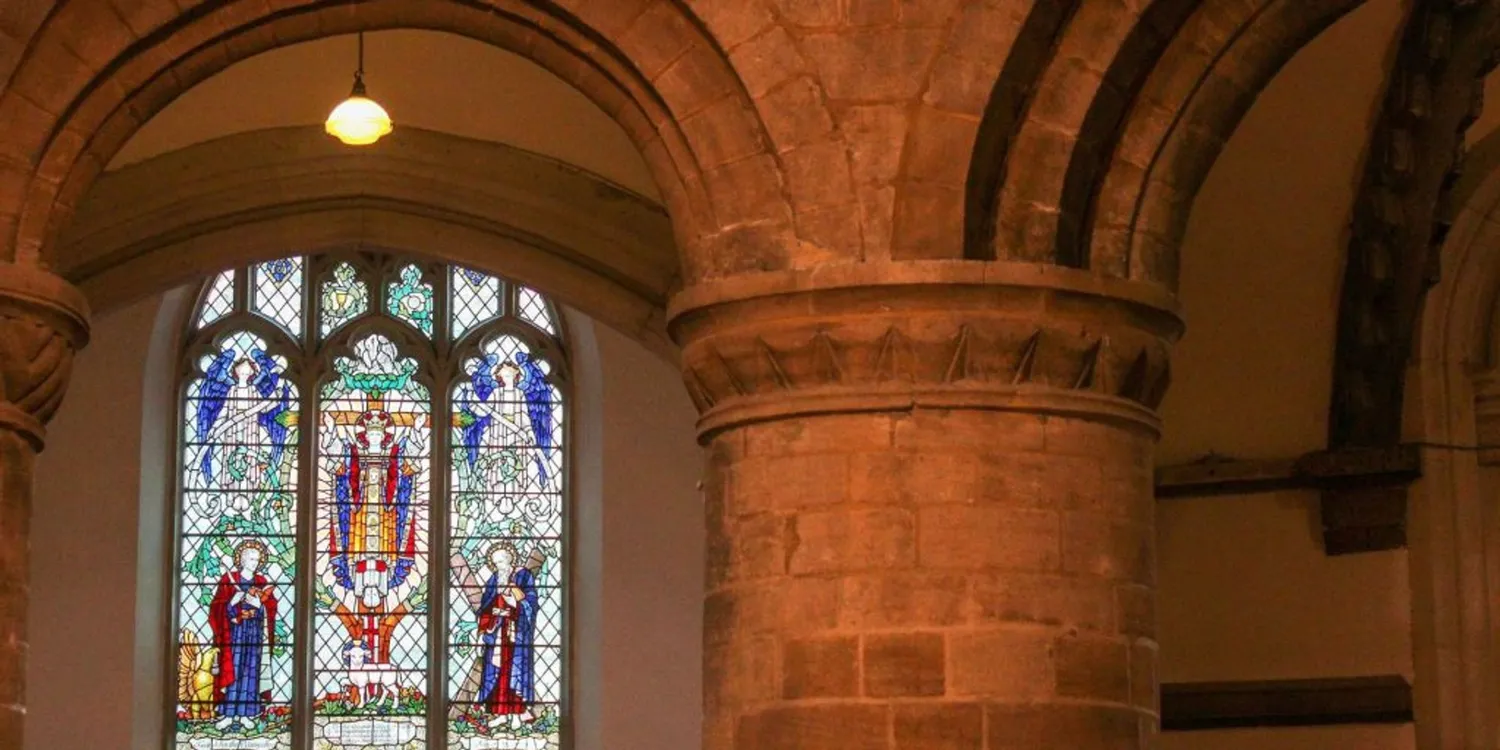
This is the biggest surprise on the route. From the outside it looks like a restrained Victorian church. Inside, it becomes something else entirely. The interior is one of the richest surviving examples of Arts & Crafts total design in England, almost every surface is painted, stencilled, or gilded. The stained glass was designed by major figures like Edward Burne-Jones and William Morris, meaning the windows are part of a unified visual system rather than isolated artworks.
3. Little St Mary’s Church
~7 min walk
The stained glass feels distinctive because Kempe’s east window is set low, placing biblical scenes almost at eye level, creating an immersive effect. Dense detail and many small angel figures reward close viewing. In the simple church interior, the glass dominates, glowing strongly in Cambridge light and enhancing emotional immediacy.
4. St Bene’t’s Church
~6–8 min walk
One easily overlooked detail in St Bene’t’s Church is hidden high in the 1867 tower window. Above the colourful scenes of Christ’s Nativity, Baptism and Ascension are six small panels, including the four Gospel writers. Their grey tinted style differs noticeably from the rest, suggesting they are much older, possibly surviving fragments of medieval stained glass carefully reused by Victorian restorers. The 1902 east window quietly celebrates King Edward VII’s coronation through crown-and-sceptre symbols, while local Cambridge artist W.H. Constable also signed several windows.
5. Great St Mary’s
~5 min walk
Everyone goes for the tower view, few stop to properly study the glass inside. One overlooked detail at Great St Mary's Church is that its high clerestory stained-glass windows were deliberately designed as a visual “Bible.” Installed in 1902–04 by James Powell to designs by William Cunningham, they portray prophets, apostles and martyrs using symbolic objects rather than labels. From the floor, many of these tiny clues are almost impossible to spot. Top tip, take some binoculars to reveal their intricate storytelling.
King’s College Chapel
No exploration of stained glass in Cambridge would be complete without the awe-inspiring King’s College Chapel. It is widely regarded as one of the most magnificent examples of late Gothic architecture in Europe, and its stained glass is equally remarkable.
Installed in the early 16th century, the chapel’s vast windows form one of the most complete surviving collections of Tudor stained glass in existence. Towering panels illustrate scenes from the Old and New Testaments, arranged in a carefully considered narrative that reflects both medieval devotion and early Renaissance thinking.
What makes these windows particularly special is not only their age and artistry, but their survival. They endured centuries of religious change, including the upheaval of the Reformation, when many other stained glass works across England were destroyed. During the Second World War, they were carefully removed and stored for protection, later returning to their rightful place in a restoration that remains one of the great conservation achievements of the 20th century.
Today, sunlight passing through these windows transforms the chapel interior into a shifting palette of jewel like colour. For visitors, it is not simply a sight, it is an atmosphere, serene and unforgettable.
Did you know King Henry VI laid the first stone of King's College. He placed the foundation stone of its famous chapel on July 25, 1446, during the Feast of St. James and he was Nineteen at the time.
The Fitzwilliam Museum
Stained glass in the Fitzwilliam Museum includes important Medieval and Renaissance panels collected from across Europe showcasing religious narratives, intricate colour, and craftsmanship. Displayed in galleries it is an opportunity to see stained glass not only as part of architecture, but as a fine art in its own right.
Robinson College Chapel
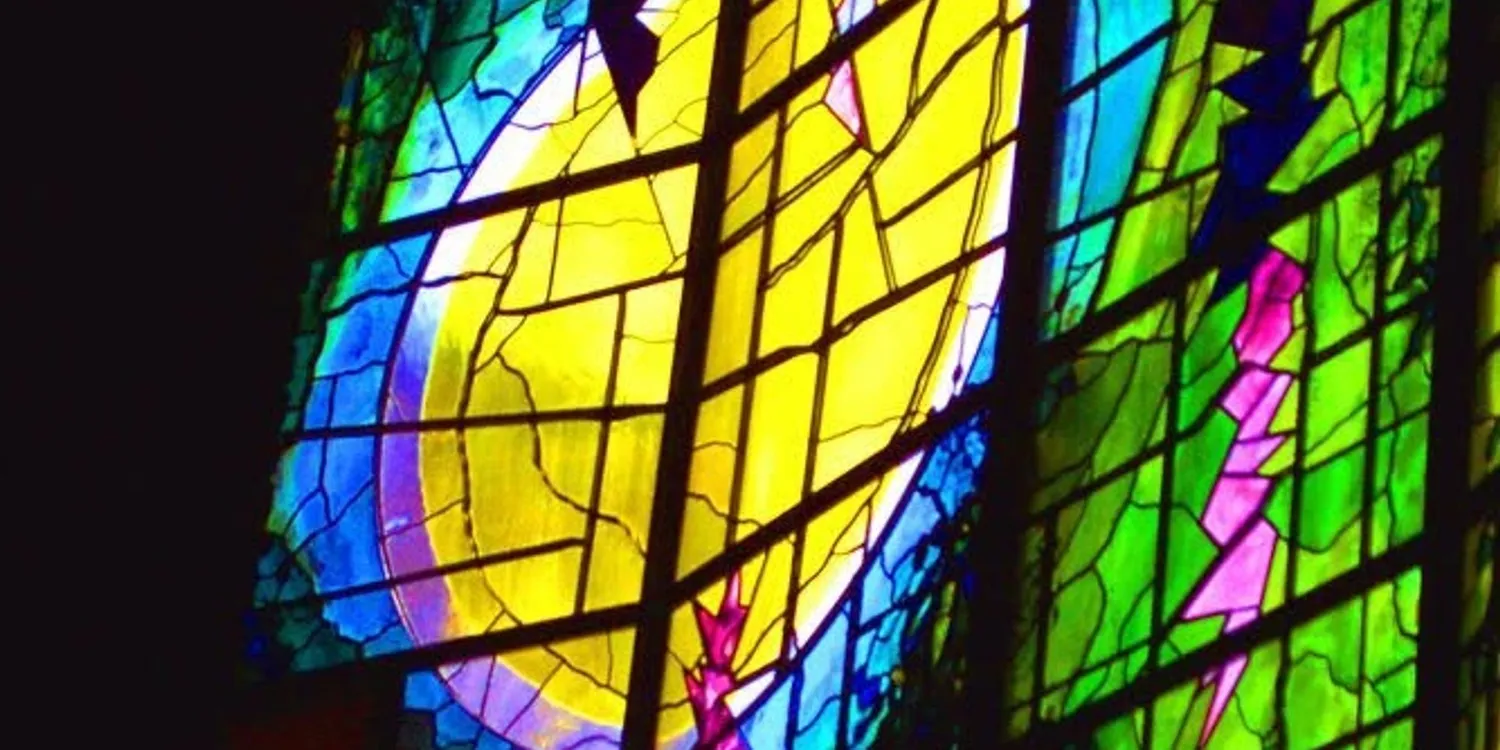
In the 20th century, Cambridge saw a shift toward modern stained glass. Installed between 1980-1981 the stained glass at Robinson College Chapel, designed by John Piper and Patrick Reyntiens, is a striking example of modern religious art. Largely abstract rather than narrative, using bold colour, light, and geometric forms it creates a powerful, contemplative atmosphere and reflects the chapel’s contemporary, inclusive architectural style.
Why Stained Glass Makes Cambridge So Special
What makes Cambridge’s stained glass so compelling is not only its beauty, but its continuity. Few cities offer such an unbroken visual dialogue between past and present. Medieval panels sit alongside Victorian interpretations; religious narratives coexist with academic symbolism; and centuries of craftsmanship remain embedded in the city’s buildings today.
There is also something uniquely atmospheric about experiencing stained glass in Cambridge’s light. The soft, changeable light enhances the effect of the coloured glass. Morning light brings clarity and detail, while late afternoon casts a warmer, more contemplative glow.
A Refined Way to Experience Cambridge
For visitors staying at University Arms or elsewhere in the city, these beautiful windows offer a perfect complement to the city’s refined pace. Whether viewed in the stillness of a chapel, the intimacy of a parish church, or the curated calm of a museum gallery, they reveal Cambridge at its most atmospheric; elegant, historic, and timeless.
Today, Cambridge offers a blend of medieval fragments, Victorian revival work, and innovative contemporary glass. In a city where every street tells a story, stained glass remains one of its most beautiful narrators.
Frequently Asked Questions:
Where can I see the best stained glass in Cambridge?
Some of the best stained glass in Cambridge can be found at King’s College Chapel, All Saints’ Church on Jesus Lane, Little St Mary’s Church, St Bene’t’s Church and Great St Mary’s. The Fitzwilliam Museum also holds historic stained-glass panels, while Robinson College Chapel offers a striking example of modern stained glass by John Piper and Patrick Reyntiens.
Can you do a stained glass walking tour of Cambridge?
Yes. Many of Cambridge’s most interesting stained-glass windows can be discovered on foot around the historic city centre. Starting at University Arms, you can walk to All Saints’ Church on Jesus Lane before continuing to Little St Mary’s, St Bene’t’s, Great St Mary’s and King’s College Chapel. Along the way you’ll encounter everything from medieval fragments and Victorian Arts & Crafts designs to spectacular Tudor glass.
Where can I see medieval stained glass in Cambridge?
King’s College Chapel is the essential stop for historic stained glass in Cambridge, with its vast early 16th-century windows forming one of the most complete surviving collections of Tudor stained glass. For something easier to miss, look high in the tower window at St Bene’t’s Church, where small grey-tinted panels may be surviving fragments of older medieval glass. The Fitzwilliam Museum is also worth visiting to see Medieval and Renaissance stained glass at much closer range.