18/11/2026
Pubs, paperbacks and punts – why this quaint UK city is made for an autumn getaway
Staying at a hotel with its own book butler, discovers the literary and foodie side of Cambridge
Cambridge offers a scenic autumn getaway characterized by Gothic architecture and seasonal foliage, with November providing more space for visitors than the crowded October period. The city features a mix of historic university sites and independent cultural landmarks, including the Fitzwilliam Museum and various specialized bookshops.
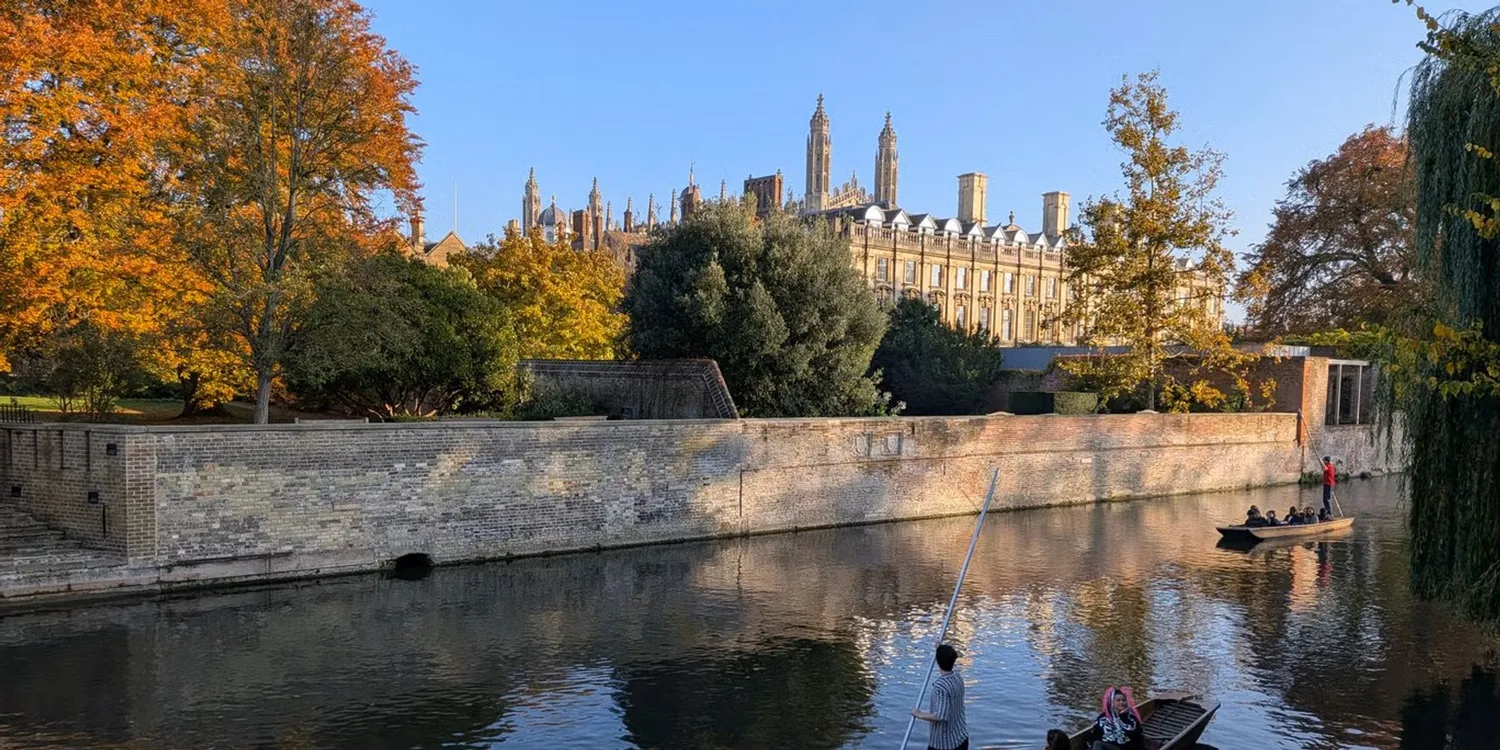
in autumn is like something out of a storybook. Gothic spires soar above the worn limestone of hallowed colleges, framed by a searing spectrum of autumnal foliage. Russet leaves pirouette as lamplight dapples the surface of the Cam, where punts glide in the gathering dark. Many flock to see dressed in her October finest, coinciding with the annual intake of undergraduates unversed in the historic city centre’s etiquette of navigating cycle lanes and narrow pavements.
Consequently, you may find at her most crowded. Wait until November, and you will find the same magic, but with a little more elbow room.
Look beyond Cambridge’s fantastically wealthy university to the “town” as much as the “gown”. By all means, gawp at the gothic splendour of King’s College Chapel, grab a Chelsea Bun from Fitzbillies and snap a pic of the Mathematical Bridge, but consider some overlooked alternatives for another view of this storied city.
If arriving by train, the Cambridge University is a natural starting point. A wonderland for seasonal leaf peepers, stroll down tree-lined avenues and warm up in hothouses where an encyclopaedic array of plants transports you to more temperate climes. Continuing towards the city centre, stop at the cultural behemoth, the . This impressive neo-Classical facade harbours an extensive collection of artworks and artefacts in opulent galleries that are free to enter.
I suggest fueling up with a caffeine stop at opposite – a cosy independent coffee house that’s become a haven for illustrators and other analogue creatives thanks to its limited laptop-friendly hours and great coffee. Running until May 2027, don’t miss the Fitz’s showstopper exhibition, ‘A Call to Art: William Morris and the Pre-Raphaelites’. Highlighting some of the lesser-known female makers behind the brotherhood, the artists’ preoccupation with the natural world and depictions of auburn-haired beauties chime nicely with the season outside.
If you admire the Arts and Crafts movement, then seek out the unassuming exterior of. This ordinary terraced home conceals an elaborate hand-painted interior carefully preserved to honour the working-class craftsman who lived here with his family. This stopover places you close to happening Mill Road – a mile-long stretch of quirky cafes, antique stores, charity shops and restaurants. Stop for a bite at the Dutch-inspired bistro , or book ahead for French fare at .
Autumn is synonymous with cosying up with a good book. If you’re similarly literary-minded, then consider the newest offering from Cambridge’s oldest hotel. ‘Stay for the Story: A Reading Retreat’ is a two-night escape designed for bibliophiles, hosted at the impeccably stylish After a few emails to gauge my literary persuasions, I meet with the hotel’s dedicated book butler in the hushed, mahogany-panelled library, where retreat guests can enjoy a complimentary drink during reading sessions. We volley a ping-pong of recommendations in a one-on-one consultation before I check in to find a curated reading list, a reading journal, and a copy of The Land in Winter by Andrew Miller in my room. Ensconced in the unparalleled comfort of the Marlowe suite, it takes some time to drag myself away from the velvet chaise longue and decadent roll-top bath overlooking the splay of Parker’s Piece.
To pick up your own new read, has been at the heart of the Cambridge literary scene since 1876. For something secondhand, sneak down St Edwards Passage for G. David’s or Henry Hardinge on the market. If crime is your go-to, specialises exclusively in murder mysteries. You’ll find it a few doors down from the former home of Cambridge’s last working hangman (look for the gibbet sign above the door…). Back at the hotel, venture downstairs to savour one of Cambridge’s culinary greats at British brasserie Parker’s Tavern, then have a cocktail or two in the dimly lit bar.
The following morning, hop on a or one of the hotel’s Cambridge blue bicycles to explore the UK’s premier bike city. While the University of Cambridge has a monopoly over the city’s most frequented museums and galleries, my favourite, the , is an independent alternative housed in a 17th-century former coaching inn. Its current exhibition, ‘Folklore’ (running until May 2027), showcases the weird and wonderful of local lore, including fenland superstitions and witches bottles in a collection gathered by the famous folklorist and former curator, Enid Porter.
Next door, is a must-see for arts enthusiasts. Alongside the gallery (free to enter) is the home of former Tate curator Jim Ede and his wife Helen, which offers an intimate, achingly aesthetic backdrop for viewing the couple’s extensive collection of the European avant-garde, including the likes of Pablo Picasso, Joan Miró and Constantin Brancusi.
Next, tick off a big-hitter with one of Cambridge’s 31 colleges, the oldest of which (Peterhouse) dates back to 1284. Take a guided tour of Trinity College, founded by King Henry VIII, and admire the chequerboard floors and ornate bookcases of the Wren Library. It was after being denied entry to these esteemed halls – home to some of Shakespeare’s first folios and the original handwritten texts of Winnie the Pooh – that Virginia Woolf was inspired to pen A Room of One’s Own.
If you’re stumped which college to pick, then cruise along the Backs (the land between the colleges and the river) with a punt trip from Scudamore’s for a duck’s-eye view of some of the most picturesque.
By now you’ll have worked up a thirst. The Eagle might be Cambridge’s most famous pub, enshrined as the locale where the discovery of the “secret of life” (DNA) was announced, and The Pickerel may be the oldest, but you’ll find my preferred spot to sink a pint down King Street. The Champion of the Thames is a 19th-century alehouse and a popular hangout for students and locals alike, with a CAMRA-recommended ale selection and snug wood-panelled bar.
Whatever the weather, a stroll or cycle along the river to Grantchester is a Cambridge institution for a slow-paced Sunday. Route through Newnham – a former village absorbed by the city to become its wealthiest neighbourhood, and stop to saunter through the stately grounds of Newnham College – the second Cambridge college designed exclusively for women and alma mater of literary titans including Iris Murdoch and Ali Smith. Pick up a pastry from on Derby Street and grab a to-go coffee from . For good coffee, this independent, speciality coffee bar tucked down a residential street is unsurpassed.
Pass through the“hedging meadows of benign Arcadian green”immortalised by Sylvia Plath, past celebrated wild swimming spots, and take cream tea under the trees at the– famous former haunt of Rupert Brooke, Virginia Woolf and E.M. Forster. Afterwards, cosy up in , where the fire is nearly always lit, candles flicker on worn wooden tables, and a dog is inevitably lolling nearby.
Heading back to the hotel, there’s time to polish off a few pages on a Cambridge weekend that’s one for the books.
Phoebe Harper was a guest at the University Arms
How to get there
Trains to Cambridge run direct from UK cities including Norwich, London, Brighton and Birmingham.
Where to stay
Rooms at the University Arms are available from £200 per night. universityarms.com
By Phoebe Harper for The Independant
Read the full article here.